 Parks of Croatia
 EU projects
 English
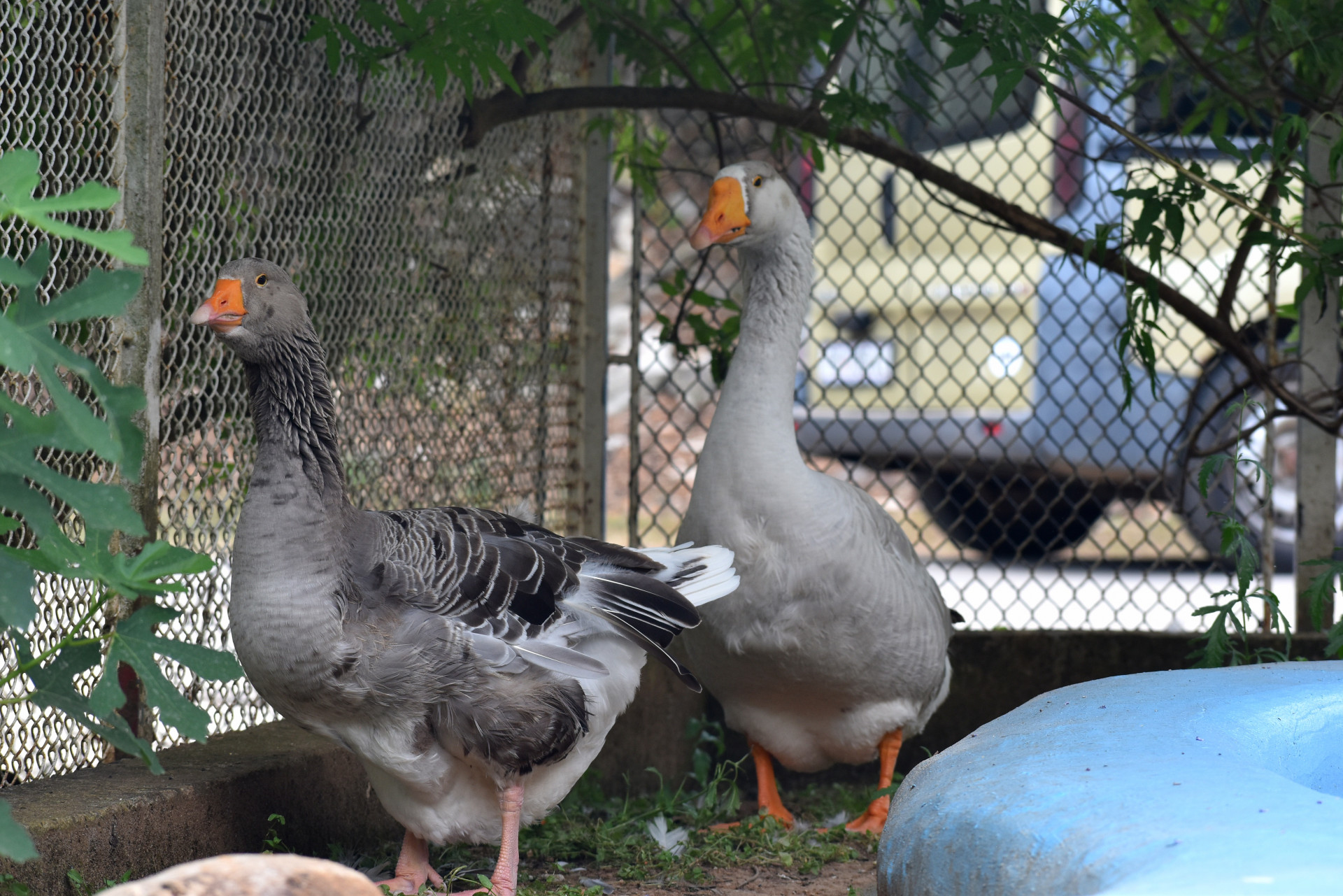
DOMESTIC (SWAN) GEESE
Anser anser domesticus x Anser cygnoides domesticus
CLASS AVES
ORDER ANSERIFORMES
FAMILY ANATIDAE
BASIC FACTS
The name swan goose comes from the graceful, elongated neck, which is similar to the neck of a swan.
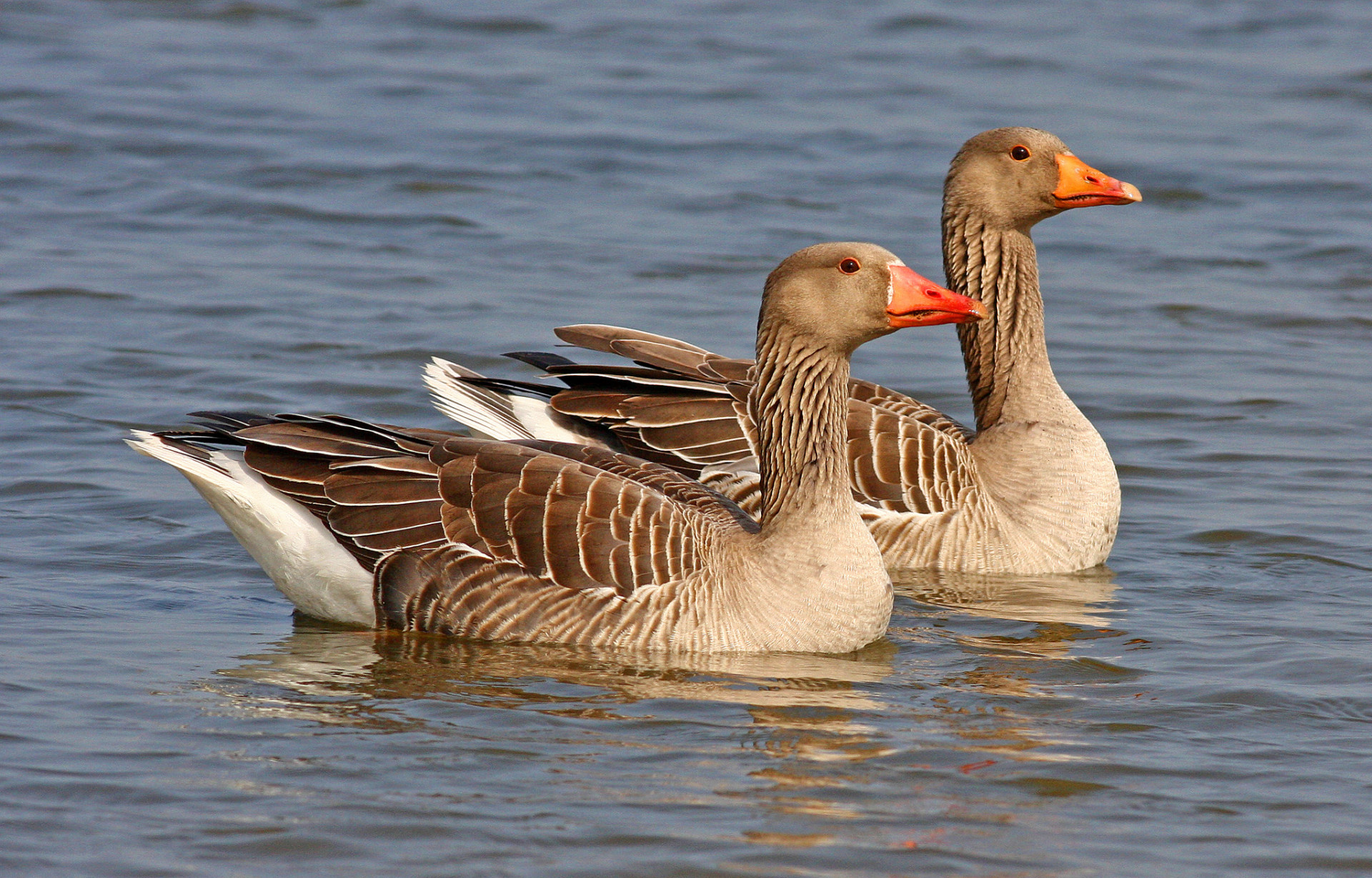
In our part of the world, the domestic goose was created by selective mating of the Greylag Goose (Anser anser), while in the eastern part of Asia it was created from the Swan Goose, also called Chinese Goose (Anser cygnoides). Although wild breeds of geese had clear, specific colors, today there are many domestic geese that are actually hybrids of both breeds, so they can easily vary in color of their feathers and other characteristics.
DID YOU KNOW?
Fossils of geese indicate their existence as early as 10-12 million years ago. Some breeds of geese are also used as guards. In 390 BC, it was the geese that warned the Romans about the invasion of Gauls, because they noticed intruders with their perceptive senses before people could. Since then, geese have been considered sacred by Romans. The rest of the world has considered them harbingers of winter.
DISTRIBUTION
Figure 1. Anser anser (A), Anser cygnoides (B)
A https://s3.animalia.bio/animals/maps/original/tx7AB8nRivhhHBrL5bsS.webp
B https://s3.animalia.bio/animals/maps/original/cJt9jbngf6VTeckqbPjc.webp
HABITAT
Large ponds, rivers and lake shores; it is possible to see them spending time in sea areas as well, when resting during migrations.
LIFETIME
10-15 years in the wild, over 30 years in captivity.
ACTIVITY
During migrations, they fly in a V formation to save energy. Because of their strong and persistent vocal abilities, some of the breeds are considered guardian geese. The males show very protective behavior towards their females. They have a very mischievous character.
Geese have a strong imprint, which means that they can consider the first creature they see as their "mother".
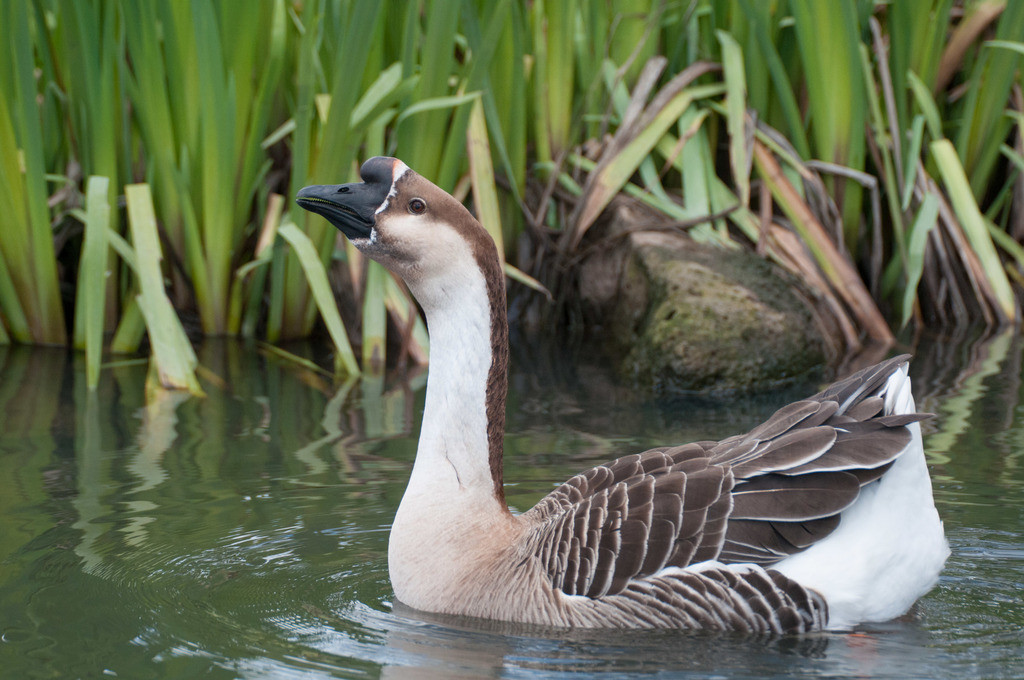
Chinese geese have a basal knob at the base of the beak, which is considered to be a sexual indicator of the individuals maturity and an attribute for attracting the opposite sex. The basal knob grows throughout life, but it is the primary characteristic of males, in which it grows at a faster rate than in females.
REPRODUCTION
Geese generally reproduce in the spring, although some breeds may start earlier. Shaking and grooming are their way of courtship, and males can be seen fighting over a female. They build simple nests on the ground. While the female incubates the eggs, the male guards their territory. Eggs are whitish with a rough surface and incubation lasts 28-30 days. Younglings become independent very soon, but stay with their parents during the first summer. They mature at 2 to 3 years of age. Many breeds form monogamous pairs that last until one of them dies, while other breeds are serially monogamous.
DIET
Roots, rhizomes of marsh plants, grasses, berries, seeds.
CONSERVATION STATUS

Figure 2. The Red List Assessment of Graylag Goose Anser anser, BirdLife International 2018.

Figure 3. The Red List Assessment of Chinese Goose Anser cygnoides, BirdLife International 2023.
General differences between a goose and a duck:
- size: geese are significantly larger in height and weight than ducks
- color of the feathers: ducks have more colorful feathers
- beak shape: due to their eating habits, ducks have wider and longer beak
- eating habits: ducks are omnivores, while geese mainly eat plant food
- lifespan: geese live much longer
- number of neck bones: ducks have 16, while geese have 17-24
Text Author: Dorotea Ćosić
Contribution: Francisca Lopes
PHOTOGRAPHS FROM THE APPENDIX
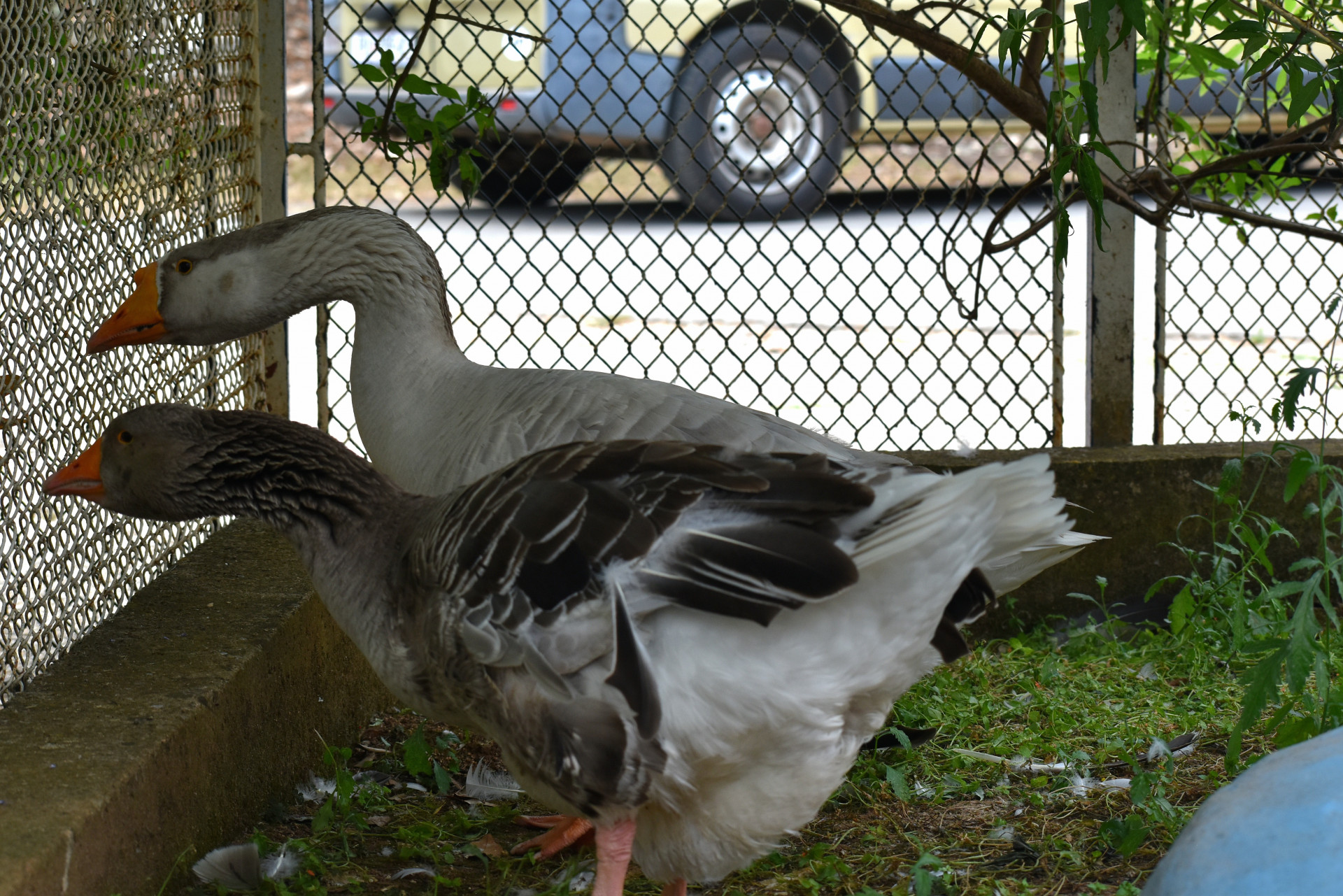
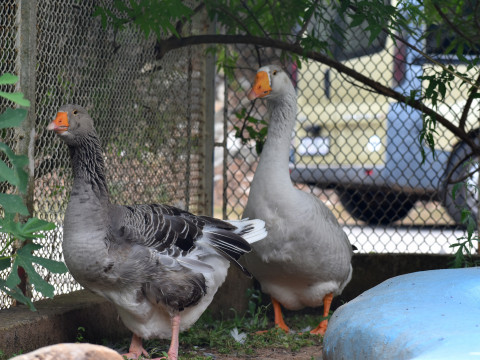
Figure 1. Domestic swan geese in the Bird Park, NP Brijuni
Figure 2. Wild goose – Greylag Goose (Anser anser)
Figure 3. Chinese/Swan Goose (Anser cygnoides)
Photographs retrieved from: